



How to organise a wine tasting at home: the practical guide
Back to all Introduction Organising
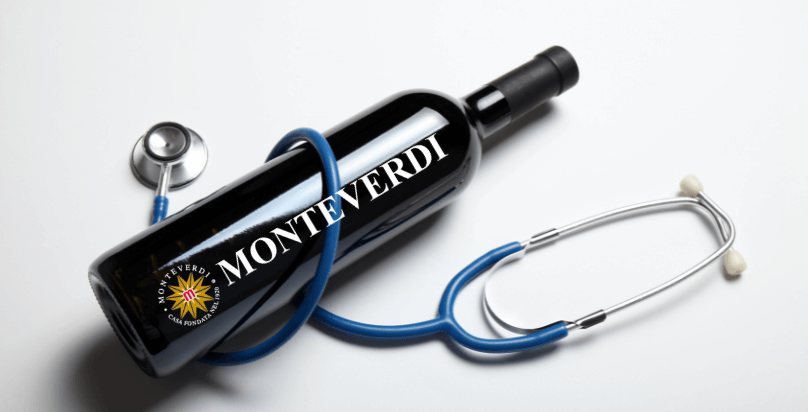


If you’re reading this, you’ve likely been following the debate surrounding the EU’s proposal to introduce a black “F” warning label on alcoholic products as part of the Nutriscore system. Wine was initially included, only to be excluded later—more for political reasons than scientific rationale.
We could trace wine’s roots back through mythology and history:
from the tale that the forbidden fruit was not an apple but a grape, to the story of Noah safeguarding the vine aboard the Ark, to Bacchus —the Roman god of wine—worshipped for the joy he brought through the vine. We could speak of terroirs, indigenous varietals, viticultural traditions, and winemaking artistry. And of course, the sensory ritual of enjoying a glass of wine.
But today, we’re investigating a different topic: Is wine good—or bad—for your health?
Let’s explore what science has to say, examining decades of research aimed at defining responsible consumption. Our goal: to bridge the perceived divide between wine and wellness.
When enjoyed in moderation, wine can offer tangible health benefits
This isn’t wishful thinking—it’s supported by institutions like IRVAS (Institute for Research on Wine, Nutrition and Health), which advocates for mindful wine consumption as part of a balanced dietary pattern, such as the Mediterranean diet.
This article explores the intersection of wine and health, highlighting how conscious enjoyment—rooted in tradition and measured by science—can contribute to overall well-being.

Let’s talk numbers. Wine and alcoholic beverages are deeply rooted in Italian cultural heritage. But when it comes to consumption terms like “little” or “too much” are subjective. What gives us clarity? Data.
By definition, an alcoholic beverage contains at least 1.2% alcohol by volume (ABV).
The ABV value printed on wine labels indicates the volume of pure ethanol per 100 ml of liquid at 20°C.
To calculate how many grams of alcohol are in your glass, use this formula: Alcohol % × 0.79 (ethanol density) × volume in decilitres
For example, a 12% ABV glass of wine
(125 ml = 1.25 dl): 12 × 0.79 × 1.25 = 11.8 g of alcohol
Ethanol is not a nutrient, even though it provides energy (7 kcal/g). Alcoholic beverages contribute empty calories, with little nutritional value beyond residual sugars.
Scientific literature supports the claim that moderate wine intake can have health benefits. The conversation gained traction in the late 1980s with the emergence of the French Paradox —a term coined when researchers noticed that despite a diet rich in saturated fats,
the French population exhibited low rates of cardiovascular disease. Researchers traced this back to their regular, moderate wine consumption.
exploring wine’s potential cardioprotective effects.
Over the years, findings have reinforced the connection between moderate wine intake and health benefits such as:
These benefits are mainly attributed to polyphenolic compounds, which are more bioavailable when paired with ethanol. The key is: moderate, regular consumption.
It means 1 glass per day for women (150 ml) and 2 glasses per day for men (300 ml).
Back to all Introduction Organising

Back to all Introduction Knowing

Back to all Introduction Finding
©Monteverdi Vini s.r.l. – Via A.Moro 19, 26851, Borgo San Giovanni
P.IVA and C.F. 10386050156
Tel. 0371 97033-2
Mail:info@monteverdivini.it

Wine has been valued for its therapeutic potential since ancient times.
Early civilizations used it as an analgesic, antiseptic, and treatment for digestive and dermatological aliments.
Our ancestors, however, had neither opinions nor proven scientific evidence.
Unlike our ancestors, today we benefit from scientific evidence.
PubMed, the leading medical and scientific database, features over 3,000 publications on “wine and health” in the last 10 years—with more than 500 published in the last year alone. This reflects an increasing global interest in understanding wine’s health implications.
Wine is a living products, not just a simple mix of alcohol and water,
but a complex matrix of bioactive compounds
whose composition is influenced by terroir, grape variety, and vinification techniques. These factors shape the wine’s unique chemical profile and potential health benefits.
Among the key bioactive constituents found in wine are:
· Polyphenols: inlcuding flavonoids, catechins, quercetin, anthocyanins
· Stilbenes: most notably resveratrol
· Melatonin and viniferin (the latter shown to protect endothelial function up to six times more effectively than resveratrol)
Wine can contain up to 1.8 g/L of nutraceutical compounds – substances that combine nutritional and pharmaceutical properties.
Red wines, in particular, are rich in antioxidants like resveratrol, which have been linked to cardiovascular health.
Studies suggest that moderate wine consumption may help reduce the risk of heart disease, increase HDL (good) cholesterol, and exert anti-inflammatory effects. However, excessive alcohol intake is unequivocally harmful and should be avoided.
IRVAS (Institute for Research on Wine and Health) promotes informed and responsible wine consumption, advocating for its inclusion in a balanced lifestyle. By collaborating with academics and healthcare professionals, IRVAS supports a wine culture that honours tradition while embracing scientific progress—without vilifying viticulture.
Recent Research
A recent press release from IRVAS spotlighted emerging scientific findings inking moderate wine consumption with improved cardiovascular outcomes.
A study published in Nature Communications, led by researchers at the Global Burden of Disease (GBD), provides compelling evidence that moderate wine consumption, within a healthy lifestyle, may benefit heart health.
Key findings from the study:
Expert insight:

Moderate wine consumption, as part of a balanced lifestyle and Mediterranean diet, may offer positive effects on heart health. Still it’s essential to underscore that alcohol abuse is harmful and never recommended. Still it’s essential to underscore that alcohol abuse is harmful and never recommended.
Bibliographic references that can be drawn on.
Visit our website to discover our curated selection of premium wines rooted in tradition and crafted with care.
Utilizziamo cookie tecnici necessari al funzionamento del sito e, solo con il tuo consenso, cookie per statistiche e marketing. Puoi accettare tutti i cookie, rifiutare quelli non necessari o personalizzare le tue preferenze. Per maggiori informazioni consulta la nostra Cookie Policy e la Privacy Policy.