Organising a wine tasting at home is the best way to bring friends together around an experience that educates the palate and creates memories. You do not need to be a sommelier: a little organisation, a few basic rules and a good selection of bottles are enough. In this guide we explain how to organise a wine tasting at home step by step: from choosing the wines to the tasting order, from essential accessories to the right food pairings. Everything you need to turn an evening into a small wine journey.
A wine tasting at home works when it has a theme. Without a common thread, you risk moving from one label to another without anything staying in your guests’ taste memory.
Themes that work: the same grape variety from different territories (e.g. four Sangiovese wines from Tuscany, Romagna, Marche and Umbria); the same territory in different styles (e.g. four Colli Piacentini wines: Gutturnio, Ortrugo, Malvasia, Bonarda); vintages compared (the same wine in three vintages); author wines (labels from small artisanal producers); Italian sparkling wines (Prosecco, Franciacorta, Trento DOC, traditional method).
The number of wines in the tasting and the order in which they are tasted are two essential decisions for a successful evening.
How many wines to serve
For an evening at home, the ideal number is between 4 and 6 wines. With fewer than 4, the theme does not develop enough; with more than 6, the palate tires and concentration drops. For each wine, allow about 80-100 ml per person (a generous half glass): enough to taste calmly.
The tasting order
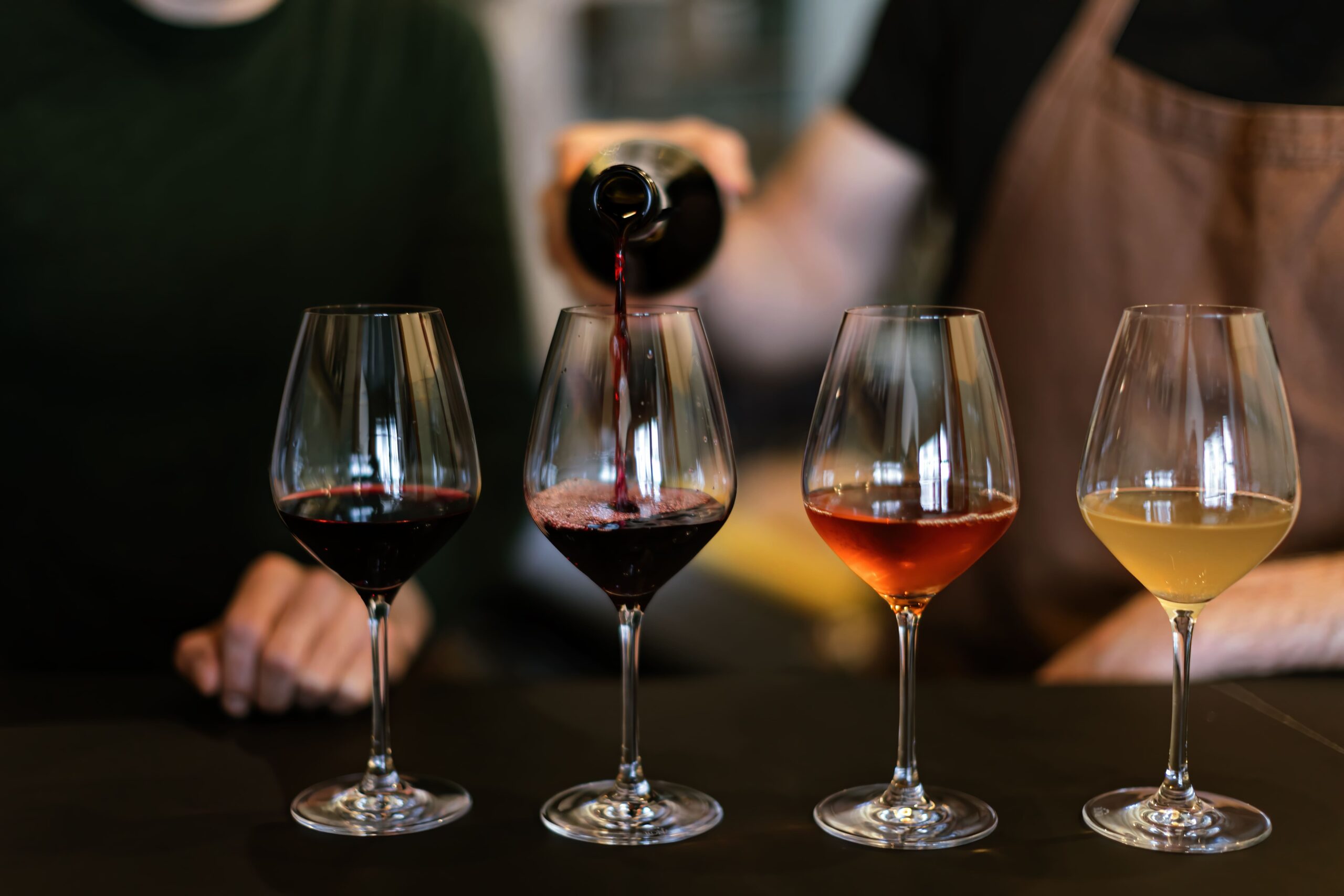
To avoid “burning out” the palate, follow this progression: from lighter to more structured (whites before reds, with exceptions); from younger to more aged (recent vintages before older ones); from drier to sweeter (leave sweet wines until the end).
If you have both whites and reds, use clean glasses between categories (or rinse the glass with a small taste of the new wine).
Sparkling wines: a special position
Sparkling wines are generally served at the beginning of the tasting, as an aperitif. More structured ones (long-aged traditional-method wines) can be included in the “real” tasting alongside whites. Sweet sparkling wines (Moscato d’Asti, Brachetto) are kept for the finale.
The right glasses
For an informal tasting at home, one universal tulip-shaped tasting glass per person is enough. If you want to be more rigorous, provide different glasses for whites, reds and sparkling wines. Important: all glasses of the same type should be identical to allow a fair comparison.
Thermometer and ice bucket
The correct temperature is crucial. A wine thermometer (even a digital one, very inexpensive) is a great ally. An ice bucket for whites and sparkling wines is essential, especially if the tasting lasts more than an hour.
Water and plain bread
Between one taste and the next, your guests must be able to cleanse their palates. Still water at room temperature and small pieces of plain white bread are perfect: no oily focaccia, no salty breadsticks. Always start from a clean palate.
Tasting sheet
To add a professional touch, prepare a small sheet with the name of the wine, grape variety, vintage, territory and three or four blank lines for tasting notes. Free templates are available online, or you can create a simple printable PDF.
Food pairings
A tasting is not a dinner, but a few food samples help maintain balance and enrich the experience. The rule: light and neutral at the beginning (bread, simple focaccia, breadsticks), richer with reds (boards of cured meats, medium-aged cheeses), a sweet finale if you serve a passito or a sweet sparkling wine (cantucci, dry pastries).
Avoid dishes that are too spicy, too aromatic or too fatty: they will cover the palate and ruin the tasting.
A good rule is to follow the classic “three-step approach”: visual examination (colour, clarity, consistency), olfactory examination (aromas on the nose), and taste examination (tasting in the mouth). You do not need to be as precise as in an AIS course: two minutes for each phase, shared aloud with your guests, are enough.
Start the conversation: “What do you smell?”, “Which of these do you like best, and why?”. It is in the shared comments that the tasting becomes an experience, not an exercise.
How many wines do you need for a tasting at home?
The ideal number is between 4 and 6 wines. With fewer than 4, the theme does not develop; with more than 6, the palate gets tired. For each wine, calculate about 80-100 ml per person, or a generous half glass.
In what order should wines be served during a tasting?
From lighter to more structured, from younger to more aged, from drier to sweeter. Whites before reds, sweet wines at the end, sparkling wines generally at the opening as an aperitif.
Which glasses should be used for a wine tasting at home?
For an informal tasting, one universal tulip-shaped tasting glass per person is enough. For a more complete experience, provide dedicated glasses for whites, reds and sparkling wines: the important thing is that they are identical within each type.
What should you pair with wine during a tasting?
A few neutral accompaniments: plain white bread, simple breadsticks, a few cubes of medium-aged cheese, delicate cured meats. Avoid very spicy, fatty or aromatic foods that would cover the wine’s aromas.
Want to organise a tasting but do not know where to start? On the Monteverdi Vini shop you will find a range of Italian wines perfect for building your selection: whites, reds, sparkling wines and sweet wines.
For themed evenings, we can suggest pre-selected tasting boxes or help you build a tailor-made choice. One phone call or message and we will guide you towards the best selection for your guests.
Utilizziamo cookie tecnici necessari al funzionamento del sito e, solo con il tuo consenso, cookie per statistiche e marketing. Puoi accettare tutti i cookie, rifiutare quelli non necessari o personalizzare le tue preferenze. Per maggiori informazioni consulta la nostra Cookie Policy e la Privacy Policy.