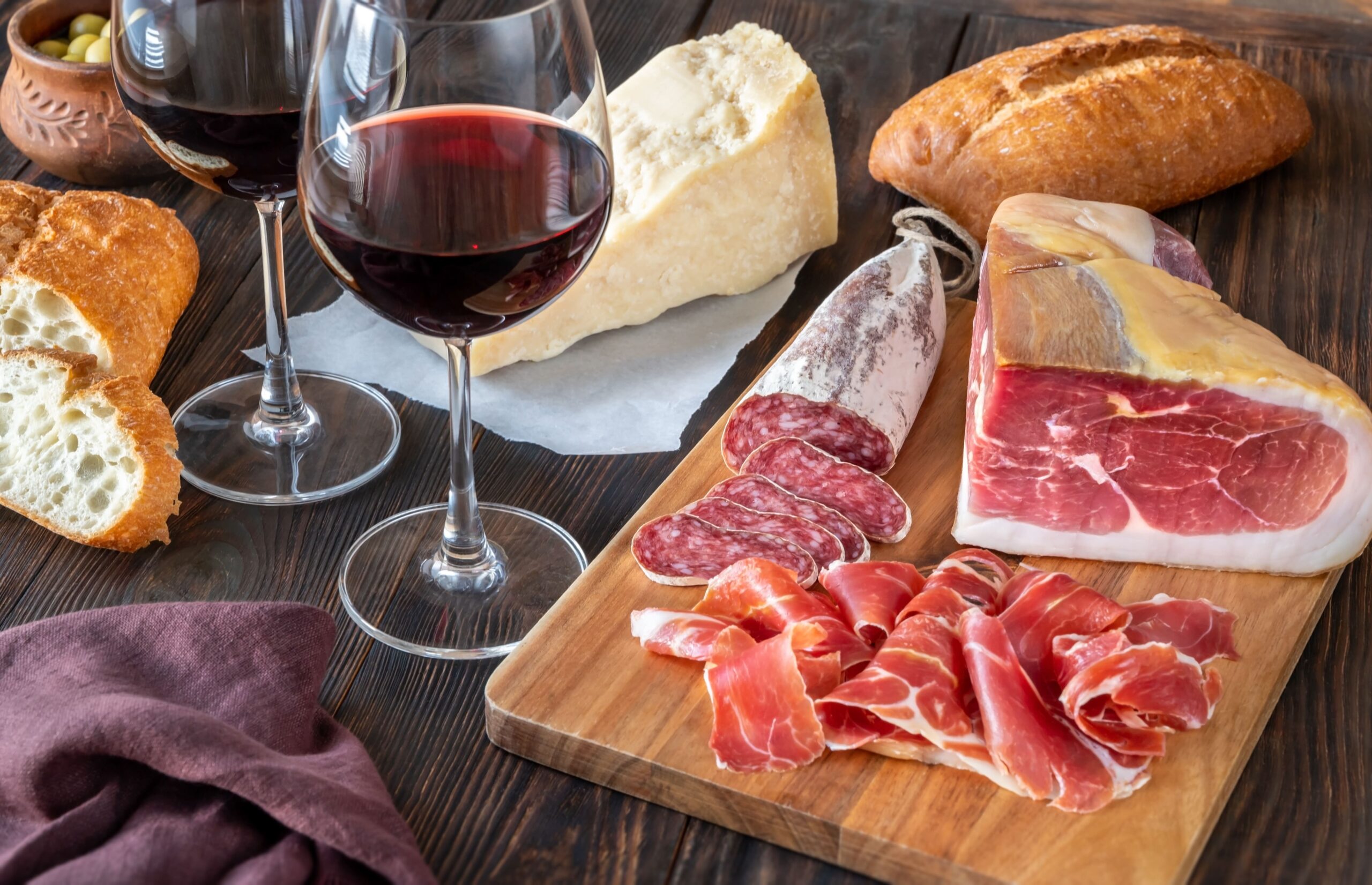
There is a moment when a board stops being a random assortment of sliced meats and becomes something serious. It happens when every ingredient is chosen with care, when the flavours balance one another, and when the right wine is in the glass — not the first bottle that happens to be there.
Building an impressive board is not complicated. You just need to know what to put on it, in what order, and above all what to uncork. In this guide, we explain everything, starting from the basics and moving on to more precise pairings for every type of cured meat and cheese.
First of all, change perspective: the board is a real course, not “plan B” when you do not feel like cooking. Like any respectable dish, it requires a thoughtful composition.
The golden rule is to build a taste journey: start with the most delicate flavours and move gradually towards the more intense ones. If you mix everything without a criterion, the stronger flavours end up covering the subtler ones and you lose half the pleasure.
A good mixed board includes, in increasing order of intensity:
Accompaniments are not decorations. Honey on an aged cheese, dried figs with a blue cheese, walnuts with Parmigiano: they are bridges of flavour that make every taste more interesting and prepare the palate for the wine pairing.
Looking for the right wines for your next board? Explore the Monteverdi shop →
Before going into the details cured meat by cured meat, there is one fundamental principle to keep in mind: the wine should always dialogue with the most flavourful ingredient on the board, not the most delicate one.
If your board is dominated by aged salami and intense cheeses, the wine will need enough character to stand beside them. If, on the other hand, it is lighter — bresaola, sweet prosciutto, fresh cheeses — the wine can be more delicate too.
Another common mistake is choosing wines that are too tannic for a mixed board. Tannins heighten the sensation of astringency and can make the aftertaste bitter, especially with delicate cheeses. Better to choose young, fruity reds, or sparkling wines — where the bubbles cleanse the palate and prepare every bite.
Coppa Piacentina is fatty, savoury and lightly spiced. Salami is bold, with pronounced savouriness. Both call for a wine that can cleanse the palate between one taste and the next.
The ideal wine: Gutturnio Frizzante DOC. It is no coincidence that it is the typical wine of the Colli Piacentini — it was born exactly to sit at the table with these cured meats. The bubbles cut through the fat, the freshness balances savouriness, and the fruity notes of Barbera and Croatina pair perfectly with the spices of coppa. It is the territorial pairing par excellence: same territory, same traditions, same taste.
Alternatively: a dry sparkling Lambrusco, a young Bonarda Piacentina.
Sweeter and more aromatic than coppa, with pronounced richness. It needs a wine with good acidity to balance it.
The ideal wine: again Gutturnio Frizzante, or a sparkling white Ortrugo from the Colli Piacentini — fresh, savoury, with notes of white fruit that enhance the sweetness of pancetta without covering it.
Delicate, slightly sweet, with soft succulence. It wants a wine that does not overpower it.
The ideal wine: an aromatic white such as Malvasia di Candia Aromatica from the Colli Piacentini, or a young, fresh Pinot Grigio. If you prefer to stay with red, choose something light and low in tannins.
Bresaola is lean, with ferrous notes and restrained savouriness. It is the most “delicate” cured meat to handle.
The ideal wine: a savoury, mineral white, or a light, fruity red such as a young Pinot Noir. Bubbles work well here too, as long as they are discreet.
Soft, aromatic, with its characteristic note of pistachio and spices. A cured meat that always surprises.
The ideal wine: a dry sparkling Lambrusco, or an Emilian Pignoletto. Effervescence cleanses the richness, while freshness enhances the aromas.
Delicate, creamy and low in savouriness. They call for young, fragrant white wines.
The ideal wine: sparkling Ortrugo, Pinot Grigio, Vermentino. The wine’s acidity enhances the softness without covering it.
More character, with growing complexity. This is where there is room for light reds.
The ideal wine: Gutturnio Frizzante or a young Valpolicella Classico. The structure is enough to sit beside the cheese without dominating it.
It is the king of the board. Savoury, grainy, with that long and persistent umami aftertaste.
The ideal wine: a still Gutturnio Superiore, or a medium-bodied Sangiovese. The soft tannins of the Superiore are rounded by the richness of Parmigiano, creating a delicious balance. Alternatively: dry Lambrusco, the traditional regional pairing.
Intense, pungent, with fermented notes that divide palates but win over those who love them.
The ideal wine: honey and sweet wine work wonders with blue cheeses — our Dolce Novella® is perfect. Alternatively, a passito or sweet Malvasia: the wine’s sweetness balances the pungency of the cheese in a contrast that enhances both.
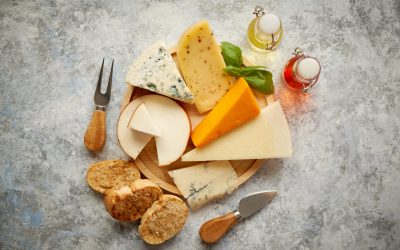
If you want to build a themed board that tells the story of a specific territory — the one where we have worked for more than one hundred years — here is the selection we always recommend:
Cured meats: Coppa Piacentina DOP · Salame Piacentino DOP · Pancetta Piacentina DOP
Cheeses: Parmigiano Reggiano (24-month ageing) · Provolone Valpadana · a blue cheese of your choice
Accompaniments: multigrain bread, breadsticks, dried figs, wildflower honey, fruit mostarda
Wines: Gutturnio Frizzante DOC for the cured meats · sparkling Ortrugo for fresh cheeses · Dolce Novella® to close with blue cheese
This board tells the story of Piacenza on a platter. It is the kind of aperitif that needs no explanation: it speaks for itself.
Want to uncork the right wine for your next board? Discover Monteverdi wines in the shop →
Wines that are too tannic with delicate cheeses. Tannins heighten astringency and make the aftertaste bitter with fresh dairy products. Keep them for aged cheeses or more intense cured meats.
Wine served too cold. A white served at 5°C loses all its aromatic character. Fresh whites should be served between 8 and 12°C, light reds around 14-16°C.
Mixing everything without an order. Always start with the most delicate flavours. If you taste Pecorino di Fossa before bresaola, you will not taste anything else properly.
One wine for the entire board. You do not have to open three bottles, but if the board is varied, consider at least two wines: a fresher one for cured meats and a more structured one for aged cheeses.
Is red or white wine better for a mixed board? It depends on the composition of the board, but sparkling wine — red or white — is often the most versatile choice: the bubbles cleanse the palate and work well with both cured meats and cheeses. Gutturnio Frizzante is our favourite answer.
How many bottles should you open for an aperitif with a board? For an informal aperitif with friends, one 75 cl bottle for every three people is a good starting point. If the board is rich and the evening lasts longer, calculate at least one bottle for every two people.
Does Piacenza wine only work with Piacenza cured meats? No. Gutturnio Frizzante pairs very well with any board of Italian cured meats, not only those from Piacenza tradition. The principle of territory is a guide, not a limit.
Is it better to open the wine in advance? Sparkling wines should be opened at the moment. Structured reds (Gutturnio Superiore or Riserva) can benefit from 15-20 minutes of oxygenation in a decanter before being served.
A good board is not only a matter of ingredients: it is a small act of care towards the people you are about to invite to sit with you. Choosing the right wine is the final detail that turns an ordinary aperitif into something people remember.
At Monteverdi, we have worked with wine since 1920. Every bottle you find in our shop has been selected to belong at the table — and a well-built board is exactly the kind of table where we want to be.
Utilizziamo cookie tecnici necessari al funzionamento del sito e, solo con il tuo consenso, cookie per statistiche e marketing. Puoi accettare tutti i cookie, rifiutare quelli non necessari o personalizzare le tue preferenze. Per maggiori informazioni consulta la nostra Cookie Policy e la Privacy Policy.